Common Challenges in Industrial Design and How Flexible Solutions Can Help
Written by: Nicole Reps, Sales & Marketing of Flex Craft
Industrial environments rarely stay the same for long. New products are introduced, production demands shift, equipment changes, and teams continually look for ways to improve safety and efficiency. Unfortunately, traditional equipment and workplace layouts are not always designed to keep up.
Fixed workstations, welded carts, permanent storage systems, and other rigid solutions may work well when first installed, but they can become obstacles as operational needs change.
Flexible and modular solutions provide a different approach. Instead of designing equipment around today’s needs alone, manufacturers can create systems that are easier to modify, expand, and repurpose as their operations evolve.
Here are some common industrial design challenges—and how flexible solutions can help overcome them.
Changing Production Requirements
One of the biggest challenges manufacturers face is change.
Production volumes can increase or decrease. New products may require different processes. Equipment can be added or relocated. A workstation designed for one operation today may need to perform an entirely different function tomorrow.
Traditional fixed equipment can make these changes difficult and expensive. Replacing or rebuilding equipment whenever requirements change can lead to higher costs, unnecessary waste, and increased downtime.
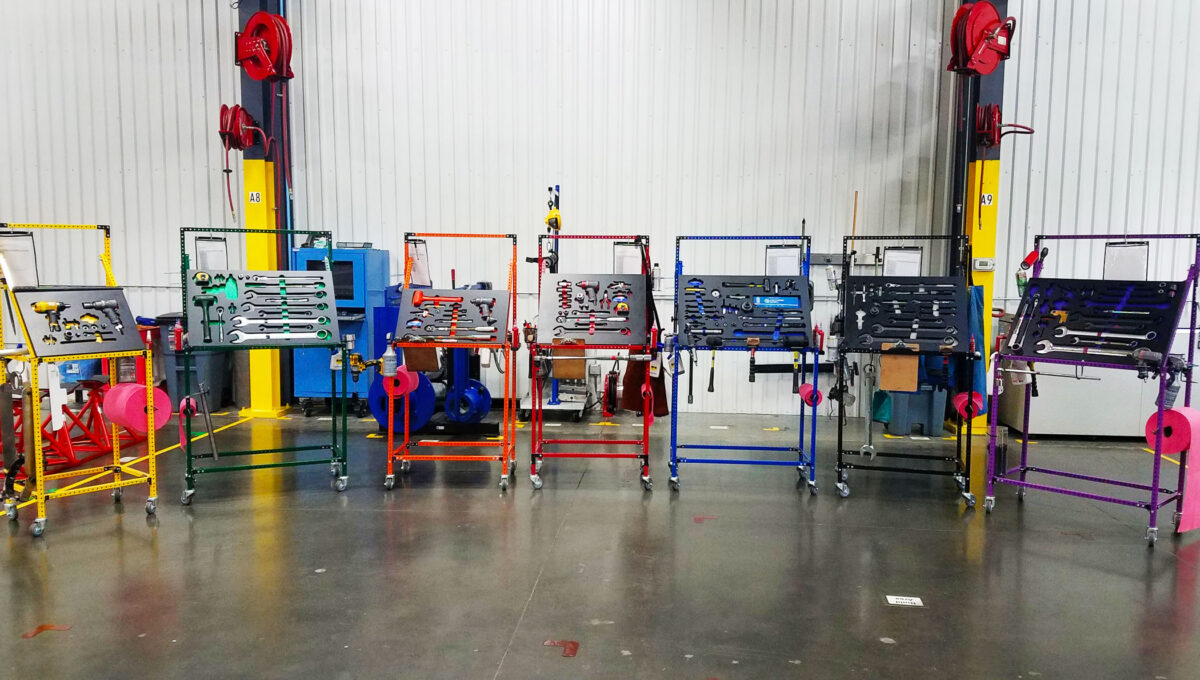
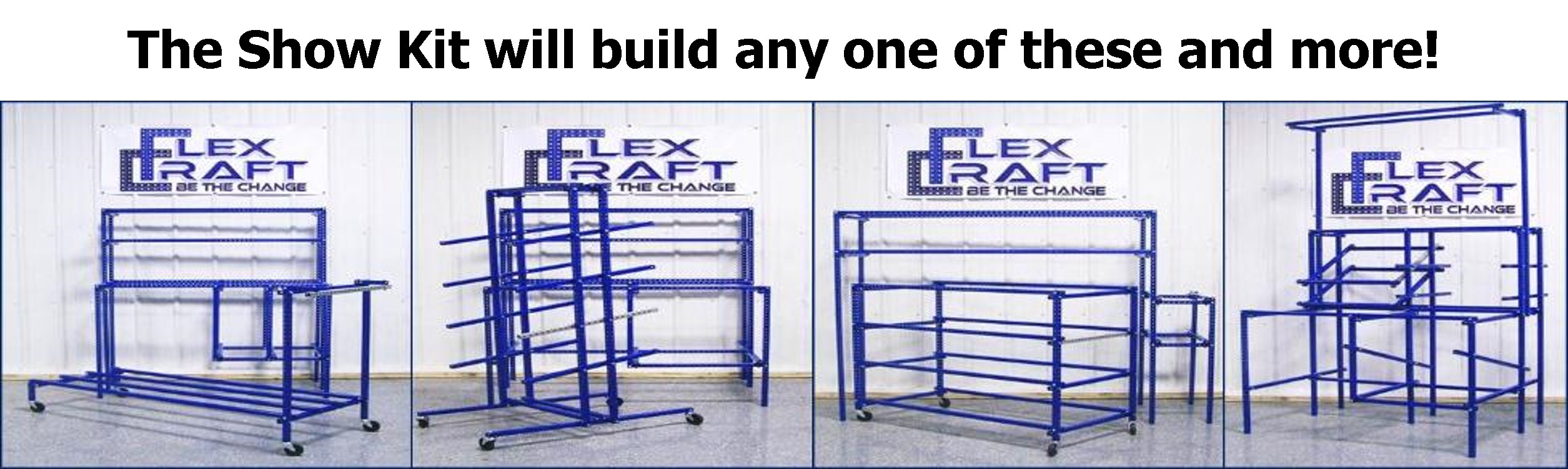
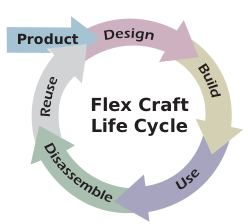
Modular equipment gives manufacturers the ability to adapt existing solutions instead of starting over. Flex Craft’s modular system uses standardized components that can be assembled, adjusted, and reused in different configurations. A workstation can be modified, a rack can be expanded, or components from an old project can be repurposed for a completely different application. This flexibility allows equipment to evolve alongside the operation.
Limited Floor Space
Manufacturing floor space is valuable, and inefficient layouts can quickly consume areas that could otherwise support production.
Oversized storage systems, poorly positioned workstations, and equipment that doesn’t match the application’s actual requirements can create unnecessary congestion.
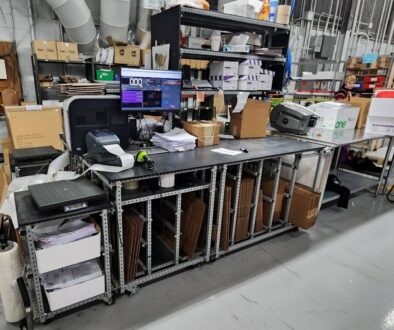
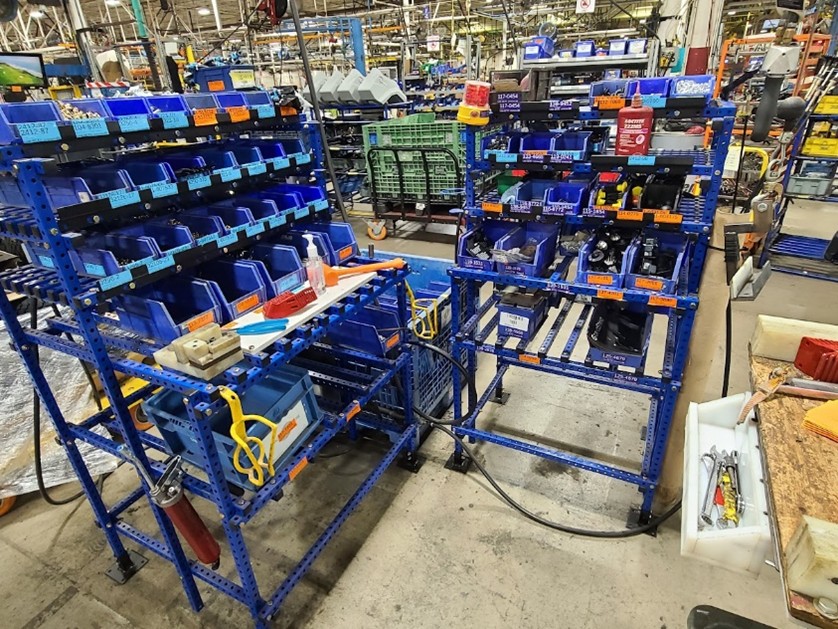
Rather than forcing an operation to work around standard-sized equipment, modular systems allow manufacturers to right-size solutions for their available space. Flex Craft can be used to create customized workstations, carts, flow racks, storage and shelving, 5S boards, assembly cells, and other workplace solutions based on the requirements of a specific application. By designing equipment around the space and process, manufacturers can make better use of their available footprint while keeping materials and tools where employees need them.
Ergonomic Challenges
Industrial design isn’t only about fitting equipment into a space. It also needs to account for the people using that equipment.
Poor workstation heights, excessive reaching, awkward material placement, and repetitive movements can contribute to employee fatigue and inefficient processes.
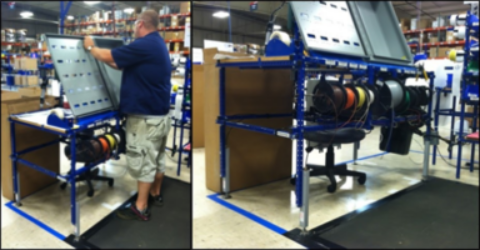
Customizable equipment makes it easier to design a workplace around both the employee and the task. Workstation dimensions, shelving locations, tool storage, material presentation, and other features can be configured to create a more ergonomic working environment. Flex Craft also offers workstation solutions with height-adjustment capabilities, helping manufacturers accommodate different employees and applications. A more thoughtfully designed workspace can help improve comfort while supporting productivity and safer working practices.
Materials Movement
Material flow plays an important role in an efficient production environment.
When employees spend unnecessary time searching for parts, walking to storage areas, moving containers, or handling materials multiple times, those small inefficiencies can add up.
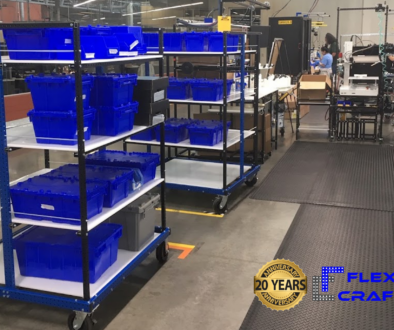
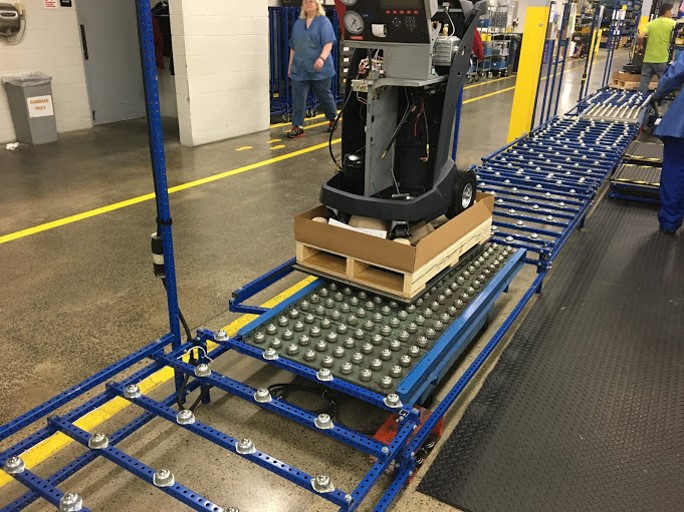
Flexible material handling equipment can help bring materials closer to the point of use and create a more organized flow throughout an operation. For example, manufacturers can use Flex Craft to create:
- FIFO flow racks
- Kitting carts
- Tugger carts
- Material handling carts
- Storage and shelving
- Workstations with integrated material flow
- Assembly lines and work cells
These solutions can be customized around the material being handled and the process it supports, rather than requiring the process to adapt around the equipment.
Balancing Customization with Simplicity
Custom industrial equipment can solve unique problems, but highly specialized solutions can also introduce additional cost, engineering time, and long-term limitations.
On the other hand, purchasing standard equipment from a catalog may not provide the exact dimensions or features an application requires.
Manufacturers often need something in between: equipment customized to the application without creating an unnecessarily complicated system.
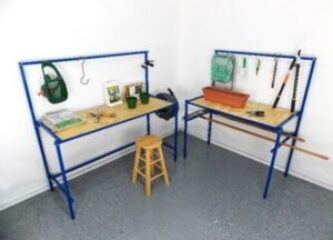
Modular framing combines standardized components with customizable configurations. Flex Craft’s system uses perforated steel tubing, brackets, fasteners, casters, conveyors, accessories, and other components that can be combined to create solutions for specific applications. Because the system bolts together, projects can also be assembled and modified without welding. Flex Craft configurations can be assembled or changed using a 1/2-inch wrench, making adjusting more accessible when improvement opportunities arise.
Supporting Continuous Improvement
Lean manufacturing encourages teams to continually identify opportunities to eliminate waste and improve processes.
The challenge comes when the physical equipment surrounding those processes is difficult to change.
An employee may recognize a better location for a shelf, a more efficient material presentation angle, or an opportunity to reorganize a workstation—but implementing the improvement can become a larger project when equipment is permanently constructed.
Modular equipment allows physical spaces to participate in the continuous improvement process. Instead of treating equipment as permanent, teams can adjust configurations as they learn what works best. Shelves can move, accessories can be added, structures can expand, and complete solutions can be reconfigured as processes improve. Giving teams the ability to make practical adjustments can help turn continuous improvement ideas into real workplace changes.

Preparing for Future Growth
Industrial equipment is an investment, which makes designing only for the immediate requirements risky.
As a business grows, it may need additional storage, more production capacity, new assembly areas, different material handling equipment, or an entirely redesigned workflow.
Rigid equipment can limit those options.
Modular systems provide a foundation that can grow with the operation. Instead of replacing an entire structure, manufacturers can often add components or reuse existing materials to accommodate new requirements. Flex Craft’s interchangeable components allow businesses to modify and repurpose equipment as their needs evolve. That adaptability can help extend the useful life of an investment while reducing the need to continually purchase completely new equipment.
Flexibility Creates More Possibilities
There is rarely one permanent solution to an industrial design challenge because manufacturing itself is constantly changing.
The equipment supporting your operation should be able to change with it.
Flex Craft provides modular solutions for workstations, carts, flow racks, storage and shelving, 5S shadow boards, robotics and machine frames, assembly lines, work cells, and other custom applications. With interchangeable components and a straightforward bolt-together design, manufacturers can build solutions around their current requirements while maintaining the flexibility to modify them in the future.
Whether you’re improving an existing workstation, reorganizing material flow, maximizing floor space, or planning for future growth, flexible design can help you create an operation that’s ready for what’s next.
Have an industrial design challenge you’re trying to solve?
Explore Flex Craft solutions or browse Flex Craft products to discover how modular components can help bring your next workplace improvement idea to life.