Lean Manufacturing Principles Explained
Written by: Nicole Reps, Sales & Marketing of Flex Craft
Lean manufacturing is a proven approach to improving efficiency, reducing waste, and delivering greater value to customers. At its core, Lean is about creating smarter systems that support people, processes, and continuous improvement.
Lean principles naturally align with modular workstations, flexible storage, and organized work environments. This guide explains the core principles of lean manufacturing and shows how they can be practically applied using Flex-Craft solutions.
What Is Lean Manufacturing?
Lean manufacturing is a methodology focused on maximizing customer value while minimizing waste. It emphasizes efficiency, consistency, and adaptability – all while respecting the people doing the work.
Rather than relying on rigid layouts or one-size-fits-all systems, lean environments are designed to evolve. Modular workstations, scalable storage, and organized workspaces make it easier to adapt as processes change.
The 5 Core Principles of Lean Manufacturing
-
Define Value from the Customer’s Perspective
In lean manufacturing, value is defined by what the customer is willing to pay for. Any activity, movement, or material that does not contribute to that value is considered waste.
- Workstations are configured to support the specific task being performed — no unnecessary features
- Storage is placed where it’s needed, reducing excess motion and searching
- Modular components allow teams to adjust layouts as customer needs evolve
By aligning the workspace with real-world tasks, teams can focus on value-added work instead of workarounds.
-
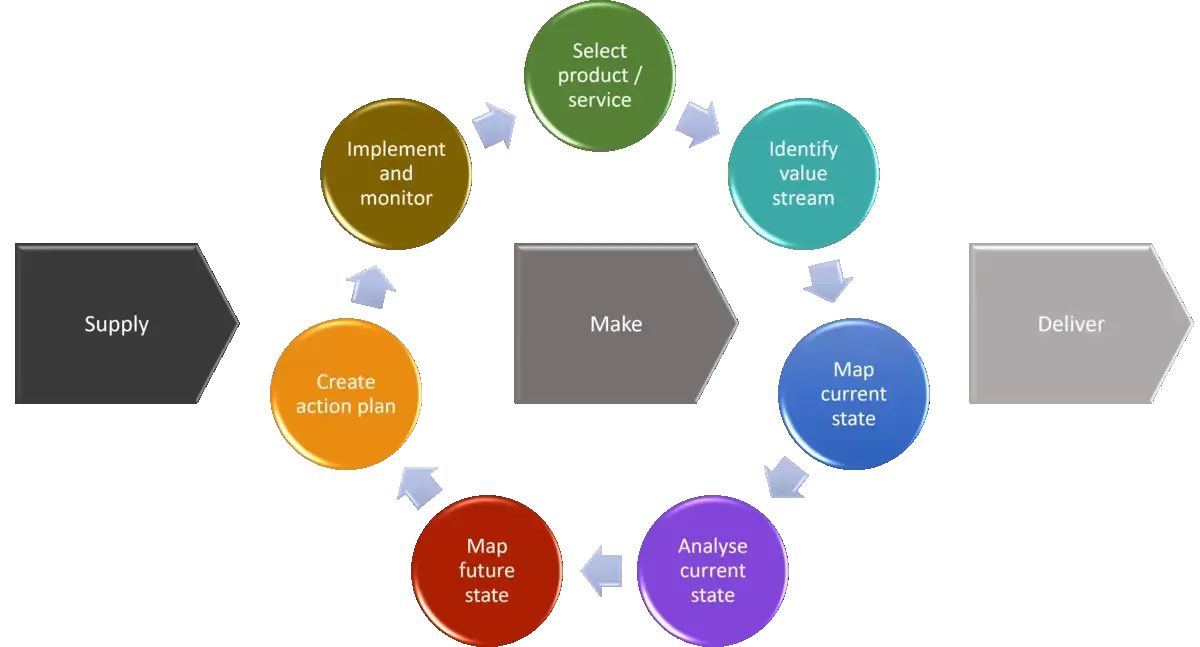
Map the Value Stream
Value stream mapping helps identify every step required to complete a process, from raw materials to finished product. This visibility reveals inefficiencies, bottlenecks, and wasted movement.
- Modular workstations make it easier to physically map and test workflow changes
- Storage systems can be repositioned to support better material flow
- Visual organization helps teams see where delays or congestion occur
When the physical environment supports the value stream, improvements are easier to implement and sustain.
-
Create Continuous Flow
Continuous flow means work moves smoothly from one step to the next without unnecessary delays, interruptions, or excess inventory.
- Adjustable-height workstations support ergonomic flow
- Integrated shelving and tool storage reduce walking and reaching
- Modular layouts allow processes to flow logically without fixed barriers
A well-organized workstation helps surface issues faster and keeps work moving efficiently.
-
Establish Pull Systems
Pull systems ensure work is performed based on actual demand rather than forecasts. This reduces overproduction and excess inventory (two major sources of waste).
- Storage systems support right-sized inventory at the point of use
- Visual organization enables easy identification of replenishment needs
- Modular bins and shelving adapt as demand fluctuates
Pull-based environments stay flexible, responsive, and clutter-free.
-
Pursue Perfection Through Continuous Improvement
Lean manufacturing encourages continuous improvement (Kaizen) – small, incremental changes driven by the people closest to the work.
- Modular components make it easy to reconfigure workstations as processes improve
- Teams can test new layouts without major disruption or downtime
- Organized environments support standard work and repeatable results
Instead of locking teams into a single layout, Flex-Craft solutions support ongoing improvement.
Reducing the 8 Types of Waste
Lean identifies eight common forms of waste, often remembered by the acronym DOWNTIME. A well-designed workspace can help reduce each one:
- Defects: Organized workstations improve consistency and quality
- Overproduction: Pull-based storage discourages excess inventory
- Waiting: Improved flow reduces idle time between steps
- Non-Utilized Talent: Ergonomic layouts allow people to focus on skilled work
- Transportation: Point-of-use storage minimizes material movement
- Inventory: Right-sized shelving supports lean inventory levels
- Motion: Efficient workstation layouts reduce unnecessary reaching and walking
- Extra Processing: Standardized setups eliminate redundant steps
Why Lean Workspaces Matter
Lean principles extend beyond processes – they are reinforced by the physical environment. Workstations and storage systems that are flexible, modular, and organized make it easier to:
- Improve efficiency without overburdening teams
- Support safer, more ergonomic work
- Reduce waste and material consumption
- Adapt layouts as operations grow or change
This approach supports long-term efficiency and sustainability, not short-term fixes.
Applying lean doesn’t require a full facility overhaul. Start small:
- Identify one workstation or process to improve
- Observe how people interact with the space
- Adjust layout, storage, or organization to reduce waste
- Measure results and refine
Modular solutions make experimentation easier – and improvement more achievable.
Key Takeaways
- Lean manufacturing focuses on value, efficiency, and continuous improvement
- The physical workspace plays a critical role in supporting lean principles
- Modular workstations and storage systems enable flexibility and flow
- Organized environments reduce waste and support long-term performance
By aligning lean manufacturing principles with flexible workstations, smart storage, and organized environments, organizations can create workspaces that grow, adapt, and improve over time – exactly what lean is designed to achieve.