Lean Manufacturing Explained: Building Smarter, Faster, and More Flexible Operations
Written by: Nicole Reps, Sales & Marketing of Flex Craft
Lean manufacturing has become one of the most important strategies for modern manufacturers looking to improve productivity, reduce waste, and stay competitive in rapidly changing markets. Originally developed through the Toyota Production System (TPS), lean manufacturing focuses on maximizing customer value while minimizing waste in every process.
Today, companies of all sizes, from automotive suppliers to custom fabrication shops are embracing lean principles to improve efficiency, reduce costs, and create safer, more organized work environments. One of the keys to successful lean implementation is having adaptable systems that can evolve alongside your processes. That’s where Flex-Craft modular solutions become powerful tools for continuous improvement.
What Is Lean Manufacturing?
Lean manufacturing is a systematic approach to identifying and eliminating waste while continuously improving workflows, quality, and productivity. The goal is simple:
Deliver more value to customers using fewer resources.
Lean focuses on reducing activities that do not add value, such as:
- Excess motion
- Waiting time
- Overproduction
- Defects
- Excess inventory
- Unnecessary transportation
- Overprocessing
- Underutilized talent
These are commonly referred to as the “8 Wastes” of lean manufacturing.
Core Principles of Lean Manufacturing
- Identify Value
Lean starts by understanding what the customer truly values. Anything that does not contribute to that value should be examined and potentially eliminated.
For manufacturers, this could mean:
- Faster production times
- Better product quality
- Improved reliability
- Lower costs
- Greater flexibility
- Map the Value Stream
Value stream mapping helps manufacturers visualize every step in a process and identify bottlenecks, delays, or wasteful activities.
Questions often include:
- Are workers walking too far to retrieve parts?
- Is inventory piling up between stations?
- Are processes waiting on material movement?
Lean organizations continuously refine layouts and workflows to improve flow and efficiency.
- Create Continuous Flow
The ideal lean operation moves materials and products smoothly from one step to the next without interruptions, excess inventory, or delays.
This is where workstation design, material handling, and floor layout become critical.
Using modular systems like those from Flex-Craft allows manufacturers to quickly create:
- Flow racks
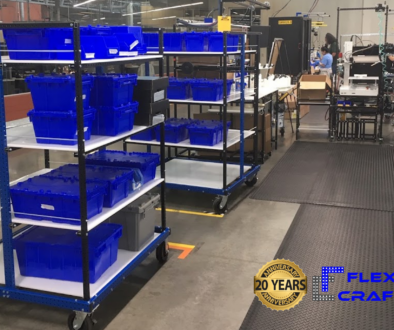
- Mobile carts
- U-shaped work cells
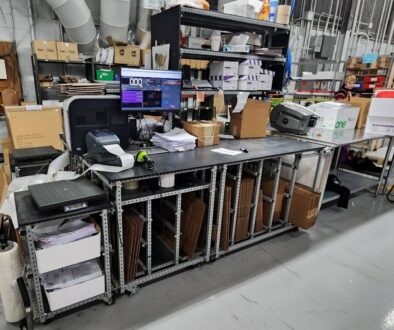
- Packing stations
- Point-of-use storage
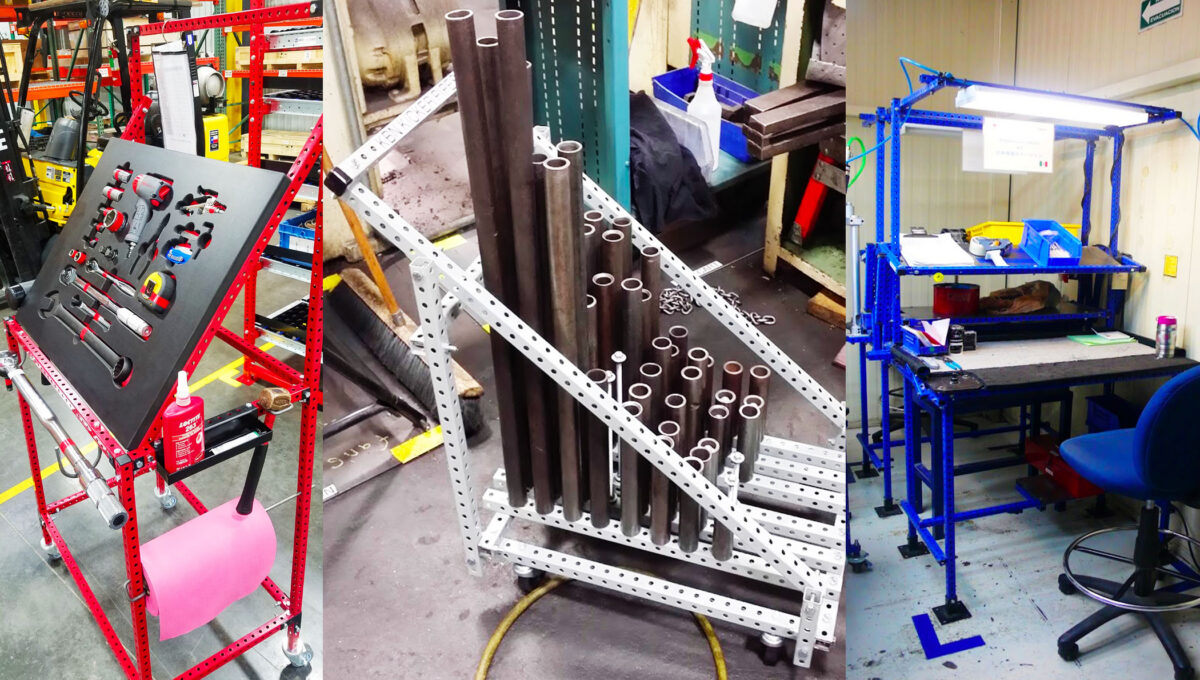
- Ergonomic workstations
These flexible systems support smoother production flow while reducing wasted movement and downtime.
Why Flexibility Matters in Lean Manufacturing
One of the biggest misconceptions about lean manufacturing is that it creates rigid systems. In reality, successful lean environments must be highly adaptable.
Production demands change.
Product lines evolve.
Customer expectations shift.
Traditional welded equipment can make change expensive and slow. Modular systems provide a smarter alternative by allowing teams to quickly modify layouts, storage, and workflows without major downtime.
Flex-Crafts modular framing systems help manufacturers rapidly reconfigure workstations, carts, and production cells using simple tools and reusable components.
This adaptability supports one of lean manufacturing’s most important goals:
Continuous Improvement (Kaizen)
Kaizen is the philosophy of making ongoing, incremental improvements over time. Instead of waiting for massive process overhauls, lean teams constantly look for small opportunities to improve safety, quality, and efficiency.
A modular system empowers employees to:
- Test new ideas quickly
- Adjust workstation layouts
- Improve ergonomics
- Reduce wasted motion
- Create custom solutions on-site
Because Flex-Craft products are designed for rapid assembly and reconfiguration, manufacturers can implement changes in minutes instead of weeks.
Lean Manufacturing and 5S Organization
Another major component of lean manufacturing is the 5S methodology:
- Sort
- Set in Order
- Shine
- Standardize
- Sustain
5S helps create organized, clean, and visually efficient workplaces where employees can quickly find tools, materials, and information.
Flex-Craft solutions naturally support 5S initiatives by enabling:
- Visual organization systems
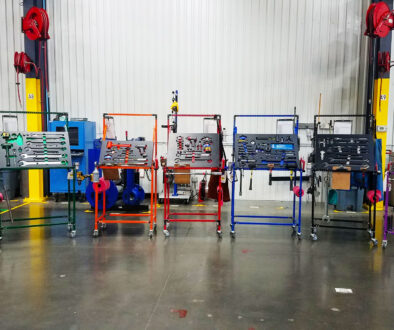
- Shadow boards
- Point-of-use storage
- Color-coded work areas
- Dedicated material flow paths
- Mobile workstations and carts
Lean workspaces become easier to maintain when equipment itself is designed around organization and flexibility.
The Role of Ergonomics in Lean
Lean manufacturing is not just about speed, it’s also about sustainability and worker well-being.
Poor ergonomics can lead to:
- Fatigue
- Injuries
- Reduced productivity
- Increased turnover
Lean organizations reduce unnecessary movement and physical strain by designing workstations around employee needs.
Flex-Craft’s adjustable workstations, ergonomic lift systems, flow racks, and custom carts help manufacturers:
- Improve posture
- Reduce bending and reaching
- Minimize lifting strain
- Keep tools within reach
- Improve operator comfort
Better ergonomics often lead to both higher productivity and improved employee morale.
Common Lean Manufacturing Applications for Flex-Craft Solutions
Manufacturers use modular systems like Flex-Craft for a wide range of lean applications, including:
Assembly Workstations
Customizable stations designed around operator efficiency and ergonomic comfort.
Material Handling Carts
Mobile carts that reduce transportation waste and improve material flow.
Flow Racks
Gravity-fed systems that support FIFO (first in, first out) inventory management and reduce excess motion.
U-Shaped Work Cells
Compact layouts that improve communication, efficiency, and workflow visibility.
Point-of-Use Storage
Keeping tools and materials exactly where they are needed to reduce wasted movement.
Packing & Shipping Stations
Flexible stations that adapt as production needs evolve.
Because the systems are reusable and reconfigurable, manufacturers can continue adapting without replacing entire structures.
Benefits of Lean Manufacturing
Companies that successfully implement lean principles often experience:
- Reduced waste
- Faster production cycles
- Improved product quality
- Better employee engagement
- Increased floor space utilization
- Lower operational costs
- Improved safety
- Greater flexibility
Lean manufacturing is not a one-time project; it’s an ongoing mindset focused on continuous improvement and long-term operational excellence.
Final Thoughts
Lean manufacturing is ultimately about creating smarter systems that eliminate waste while empowering employees to improve processes every day.
The right equipment plays a major role in making lean initiatives successful. Fixed systems can slow improvement efforts, while modular solutions provide the flexibility needed to adapt quickly and continuously optimize operations.
With customizable workstations, carts, flow racks, ergonomic solutions, and rapid reconfiguration capabilities, Flex-Craft helps manufacturers build lean environments that are efficient, organized, and ready for future growth.
Whether your company is just beginning its lean journey or refining an advanced continuous improvement strategy, modular systems can provide the flexibility and scalability needed to stay competitive in today’s manufacturing landscape.