Safeguarding Material Handling Workflow: ESD Protection
Written by: Nicole Reps, Sales & Marketing of Flex Craft
In fast-moving manufacturing and logistics environments, smooth material handling is a vital part of day-to-day operations. Whether you’re moving boxes, totes, components, or assemblies, electrostatic discharge (ESD) can quietly undermine product integrity and process reliability—especially when handling sensitive electronics or precision parts.
This artical explains why ESD protection matters, how it manifests in material handling systems, and how incorporating smart conveyor solutions like Flex-Craft components can support your ESD strategy.
👉 What Is ESD and Why You Should Care
Electrostatic discharge (ESD) refers to the sudden transfer of static electricity between two objects at different electrostatic potentials. When this happens near sensitive electronics, sensors, or finely machined parts, invisible damage can occur—leading to latent defects, part failures in the field, and costly rework down the line. Static charges as low as 30 volts can harm sensitive components, even without noticeable sparks.
ESD control in material handling is about preventing charge buildup and providing safe discharge paths so that static doesn’t reach damaging levels. It’s not just a concern for electronics assembly; any process where materials move, rub, or separate can generate static—especially in low-humidity environments common in industrial facilities.
📦 Material Handling and Static: How Conveyors Play a Role
Conveyors are a workhorse of material handling and lean manufacturing. They keep parts flowing, reduce manual lifting, and improve cycle times. But movement itself creates static:
- Materials sliding over conveyor surfaces can generate charges.
- Insulative components (like cardboard, plastics, or tapes) can trap and carry charge.
- Dry winter air increases static buildup.
This is where smart conveyor design and surface materials come into play.
🛠️ ESD-Friendly Design Considerations for Material Handling
Here are key material handling elements that help mitigate static risks in industrial environments:
- Use Dissipative or Conductive Materials Where Possible
Replacing non-conductive rollers, surfaces, or guides with ESD-safe and static-dissipative materials reduces charge accumulation potential, making static less likely to build up in the first place. - Grounding and Equipotential Bonding
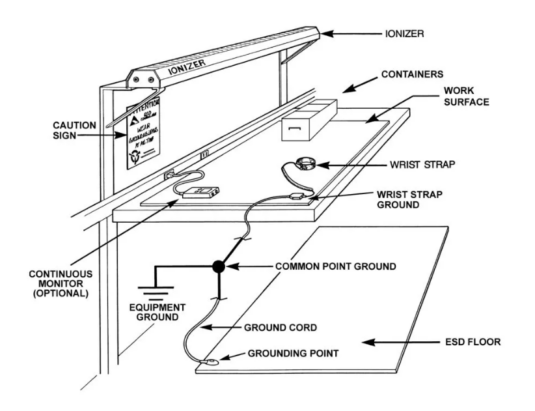
Ensuring that equipment, conveyors, and structures are part of a common ground path allows charges to safely dissipate to earth rather than into sensitive parts. This includes grounding workstation surfaces and any static-dissipative conveyor elements. - Environmental Control
Humidity plays an under-appreciated role in static generation. Maintaining relative humidity between 40–60% lowers static buildup and complements asset-level ESD controls. - Training and Procedure
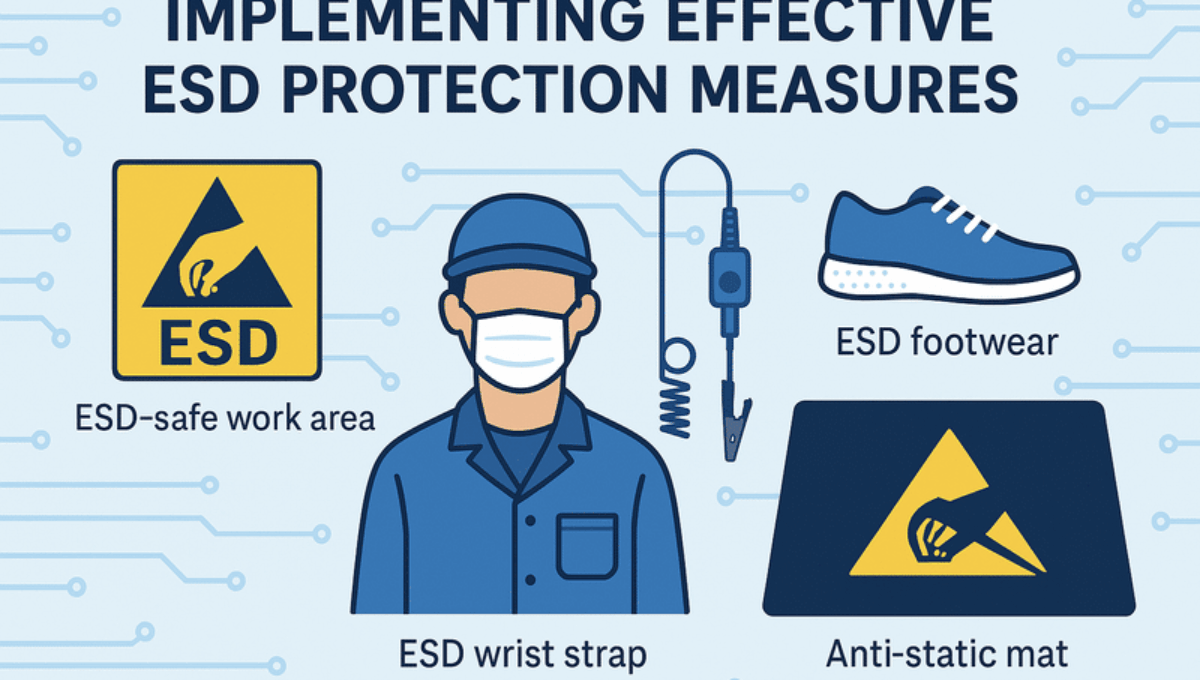
Operators should be trained in ESD awareness, including recognizing the impact of static generators and proper handling processes. Procedures like checking grounded wrist straps and monitoring static levels should be routine.
🚚 How Conveyor Components Fit Into ESD Protection
Even conveyors that aren’t inherently “ESD-rated” can be integrated into a broader ESD control plan with thoughtful design:
- Surface selection: Materials that don’t accumulate static or that are static dissipative help keep charge levels low like Polycarbonate Plastics, Wood, Copper, Aluminum, Steel, and Anti-static Foam or Bubble Wrap are a few examples of this.
- Grounding every component: If you’re using modular material handling systems and conveyors, make sure there’s a common grounding strategy.
- Adaptability for sensitive lines: In areas where static sensitivity is high, conveyor surfaces and nearby structures should be specified with ESD in mind.
One flexible solution that works well in lean material handling environments is the Slide Sheets 120″ from Flex-Craft. While Slide Sheets are primarily designed to help cartons and totes effortlessly slide into place using gravity and surface tension, they also provide a smooth, low-friction surface—helpful in reducing the friction that can lead to static buildup in the first place.
Integrating components like Slide Sheets into your flow rack or conveyor setups not only boosts throughput and ergonomics, but when paired with an overall ESD plan, helps minimize static generation in movement zones.
🧠 Bringing It All Together: Best Practices
To build an effective ESD-protected material handling system:
✔ Assess static sensitivity of your products and processes.
✔ Use static-dissipative materials and grounded systems where possible.
✔ Maintain environmental conditions that reduce static generation.
✔ Integrate conveyor and handling elements like Flex-Craft products thoughtfully into your ESD strategy.
A comprehensive ESD plan doesn’t rely on a single product or approach—it layers materials, grounding, environment, equipment, and operator habits into a cohesive system that protects product quality and uptime.
Material handling systems are more than just conveyors moving goods from point A to B—they’re part of a chain of care that preserves quality, reduces defects, and supports smooth operations. When ESD control is baked into conveyor selection, work surface materials, and process design, your facility is better positioned to avoid costly static-related failures.