Product Development: Customer Focused Design
Written by: Jeff Frank, Engineer & Quality of Flex Craft
I will never forget the day putting together a thin wall corrugated steel raised garden box. It had easy to assemble instructions with one type of nut and bolt for simplicity. What looked like a simple assembly was starting to turn ugly when the panels and corners were coming together. What was supposed to take 20 minutes to assemble turned into two hours, was now collapsing under its own weight, looking like a parallelogram, and was denting from handling just trying to move from the garage to the garden. I guess it’ll be good enough to hold dirt once it’s full, but I had my reservations of how long it would last and was it even worth the hassle to build the second nicely packaged unit.
As a Design Engineer with a quality background, it was hard to separate what I would do differently to make this a more satisfying experience, being I was now the end customer of someone else’s vision. This product was purchased from a local store, and they got it from a high-volume producer, even if I chose to complain or offer suggestions to make it better, the product could have been retired the following year. We use terms like cheap, cutting corners, good enough, but did it meet the standard fit, form, function model of a manufactured product? Expectations vs Reality?
Each piece was reproduced similarly. No shortage of nuts and bolts. Instructions were great. Yet the general assembly was a bit over the top and difficult to manage since nothing had perfect 90 deg corners. The corrugation, there for side wall strength left ½ inch deep gaps in the corners so if it rained hard, soil leakage was a definite possibility in all four corners. To prevent this, I added a caulk to all the corners just to help in that instant. It wasn’t in the instructions to do, but from experience I thought it would help. At the end of the day, we filled it up and had lots of tomatoes, so I guess the product did as advertised.
I could have bought a horse water trough because its shape was similar, was one piece and a heck of a lot sturdier since it’s made with heavier gauge metal. But its wasn’t as pleasing to the eye, where our garden box had painted colors. Looked great on paper, but definite on the verge of a poor structural product since it was created with bare minimums.
These lessons I always keep in the back of my mind as a Design Engineer for Flex Craft. Our products serve the industrial commercial material handling industry, but there are so many other creative applications shown to us by customers from the general public. We want to ensure not only a robust product line, but also one that keeps our customers safe by including tech specs and best practices both with instructions and videos online.
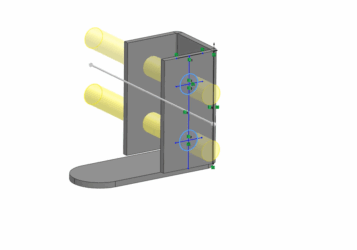
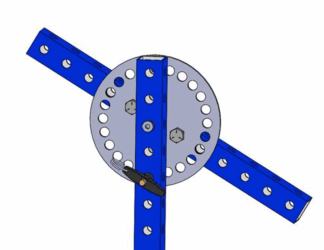
There are two major philosophies when designing products, need base and push base. Need base focuses on solving problems users have, addressing pain points, and meeting existing demands. Need base can also be thought as User-Centered Design, focusing on the end-user’s needs, solving their problems effectively, and creating enjoyable experiences, while also aligning with business goals. Push base design introducing new concepts, technologies, or ideas that users might not know they need yet, pushing boundaries. The reality is you’re looking for product diversity that balances both situations.