5 Innovative Applications for Flex Craft Tubing in Industrial Design
Written by: Nicole Reps, Sales & Marketing of Flex Craft
In fast-paced industrial environments, flexibility and adaptability are just as important as rigidity and strength. Flex Craft’s bolt-together perforated square tubing system (16- or 12-gauge steel or aluminum) is designed to let engineers and designers iterate, reconfigure, and reuse structural frameworks with ease.
Here are five forward-thinking applications where Flex Craft tubing shines — and how you can make them work in your facility.
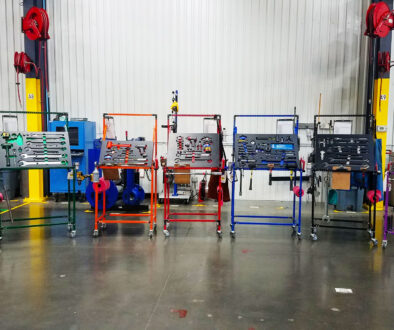
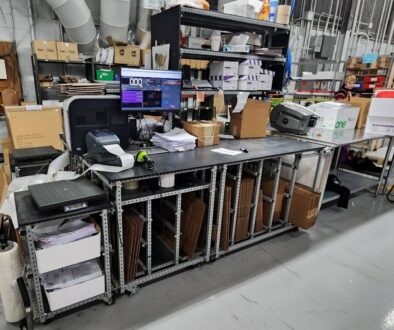
Dynamic Workstations & Ergonomic Assembly Cells
Flex Craft’s system is built for fast assembly: you can build with a ½″ wrench, and because tubing is offered in pre-cut standard sizes, you often avoid cutting altogether.
The perforated, modular design enables quick adjustments in height, reach, or component layout—perfect for lean manufacturing and continuous improvement.
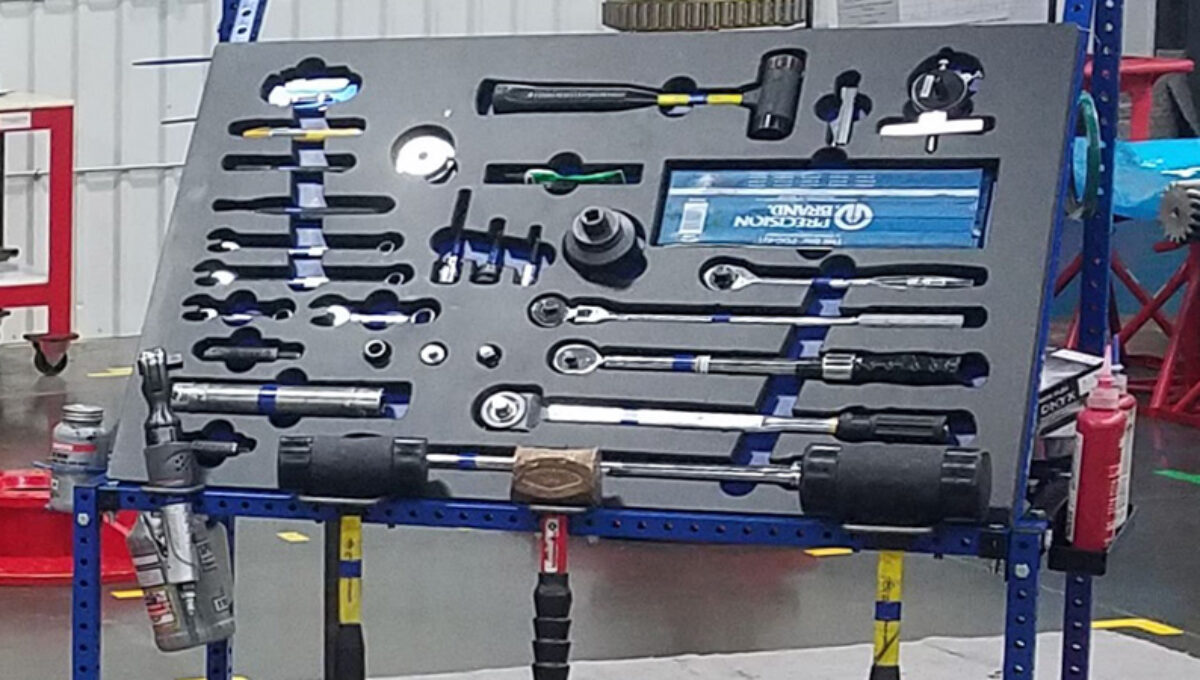
Add-on components (shelves, tool holders, brackets) can bolt directly into the tubing.
- Adjustable assembly benches that evolve as product variants shift.
- Integrating monitor arms, tool rails, or feeder bins directly into the frame
- Hybrid cells combining storage, conveyors, and operator stations
Best practices
- Use direct bolt joints at critical corners (they are strongest)
- Leave extra “holes” (unused bolt positions) to support future expansions
- Use gussets or reinforcing members when spans grow large to avoid deflection

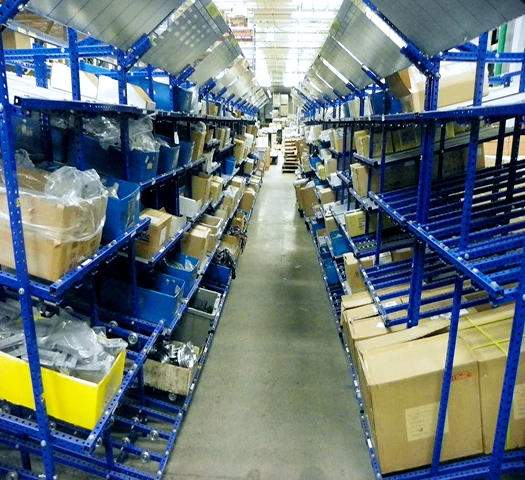
Reconfigurable Material Flow & Support Structures
In supply chains and production lines, layouts often change depending on product flow or takt times. With Flex Craft tubing, you can modularly reconfigure racks, flows, and supports rather than rebuild.
The standard bolt pattern allows mounting of guide rails, rollers, brackets, or stop elements directly into the structure.
- Gravity flow lanes whose widths or inclines shift with new part sizes
- Support frames for conveyor modules or slides
- Transfer lanes, accumulation zones, or buffer racks that can be scaled or rearranged
Best practices
- Distribute loads evenly—single point loads reduce capacity significantly
- Use doubled tubes or triangulation where higher rigidity is required
- Incorporate flow brackets or slotted supports to allow angle/tilt adjustments
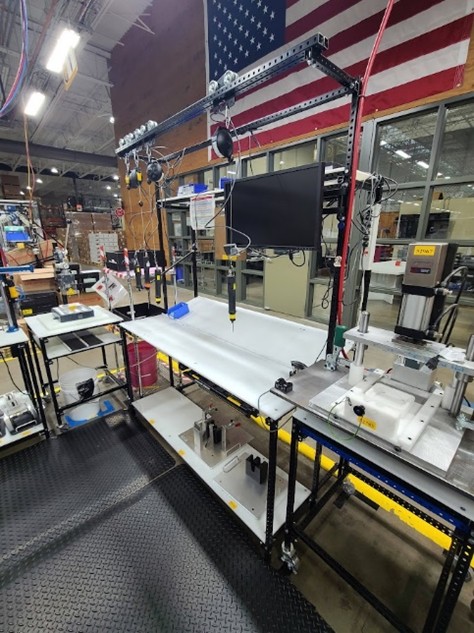
Prototype & Test Frames
In R&D, process validation, or testing, the ability to adapt your frame as you refine your process is huge. You avoid scrapping welded prototypes.
Because Flex Craft frames are reusable, components from one prototype can roll over into the next.
- Lab-scale machines or jigs for trialing new methods
- Hybrid test benches combining mechanical, electrical, or process modules
- Temporary fixtures or setup frames in production lines
Best practices
- Begin with a backbone / skeleton frame and reserve modular zones
- Pre-integrate mounting options for sensors, actuators, or cable trays
- Always keep spare tubing and accessory components on hand to support quick rework
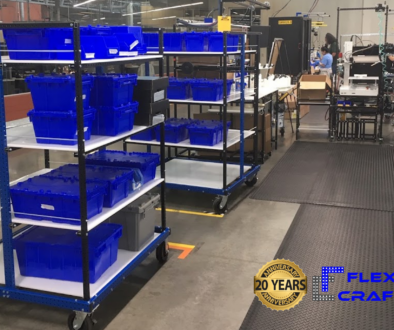
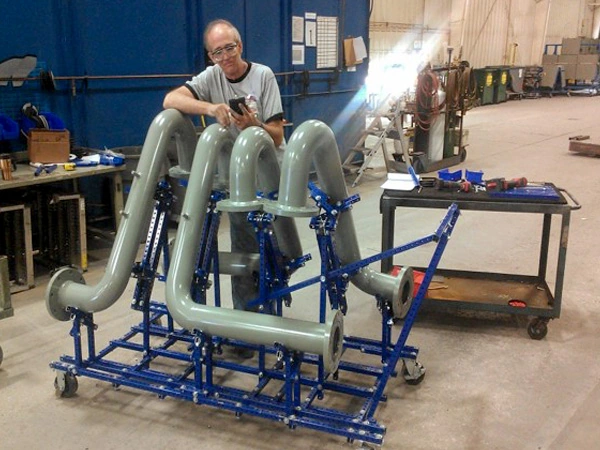
Modular Carts, Tugger Systems & Mobile Platforms
Flex Craft explicitly supports mobile use cases (carts, towables) as part of their system offerings.
The modular frame means you can reconfigure cart layouts, swap modules, or repurpose frames across multiple use cases.
Heavy duty inserts, casters, and hitch accessories integrate directly.
- Multi-purpose carts that can switch between part transport, tools, or assembly
- Tugger trains where multiple modules can interconnect or detach
- Mobile test rigs or portable frames that accompany processes
Best practices
- Pay attention to center of gravity (especially in taller or loaded builds)
- Use nylon lock nuts or vibration-resistant fasteners in high-movement zones
- Design for quick-release attachment points to detach or reassemble modules
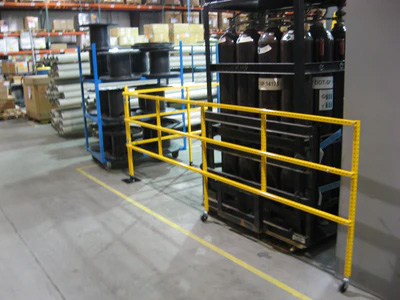
Safety Guarding, Enclosures & Flexible Machine Frames
Many machines demand guarding or protective frames—but fixed guard solutions can be expensive, inflexible, or difficult to service. A modular tubing system lets you reposition or expand as needs evolve.
You can bolt panels, mesh, or polycarbonate to the tubing.
- Enclosures around robotic cells, presses, or cutting machines
- Safety fences or walkways that adapt to changing layouts
- Removable or hinged guards that allow maintenance access
Best practices
- Focus rigidity in critical zones (corners, joints) using gussets or flush joints
- Evaluate impact and vibration loading in design
- Use hinge brackets, removable panels, or sliding doors for maintenance
Design & Engineering Considerations
- Load ratings & deflection: Flex Craft publishes load tables for 1″×1″ and 1″×2″ tubing under evenly distributed loads.
- Joint strength: Direct-bolt connections are strongest; bracketed joints are more flexible but weaker relatively.
- Reuse & lifecycle cost: One of Flex Craft’s core selling points is that the tubing is 100% reusable—disassemble and repurpose for new projects.
- Accessories & system integration: The product catalog includes brackets, casters, tool holders, wire forms, hitches, conveyor brackets, and more.
- Fast fabrication: Their marketing emphasizes “ONE tool … Endless possibilities.” with assembly using just a ½″ wrench.
Flex Craft’s modular tubing system offers a compelling middle ground: stronger and more stable than makeshift structures, yet far more adaptable and reusable than welded frames. In industrial design contexts where change is constant, these five applications exemplify how you can build for flexibility from day one.
👉 Contact Flex Craft today to explore a solution tailored to your operation.